

Karina

Isotope movement holds key to the power of fusion reactions
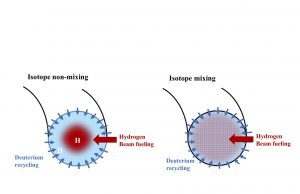
Fusion may be the future of clean energy. The same way the sun forces reactions between light elements, such as hydrogen, to produce heavy...
Physicists may have accidentally discovered a new state of matter
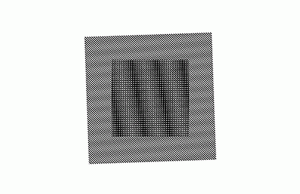
Humans have been studying electric charge for thousands of years, and the results have shaped modern civilization. Our daily lives depend on electric lighting,...
Large exoplanet could have the right conditions for life
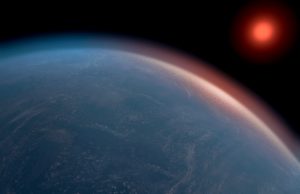
Astronomers have found an exoplanet more than twice the size of Earth to be potentially habitable, opening the search for life to planets significantly...
Digging into the far side of the moon: Chang’E-4 probes 40...
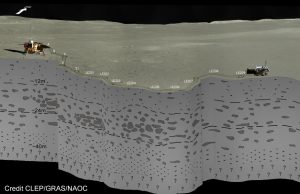
A little over a year after landing, China's spacecraft Chang'E-4 is continuing to unveil secrets from the far side of the Moon. The latest...
Method with polarized light can create and measure nonsymmetrical states in...
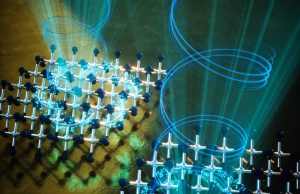
Some molecules, including most of the ones in living organisms, have shapes that can exist in two different mirror-image versions. The right- and left-handed...
Scientists discover new clue behind age-related diseases and food spoilage
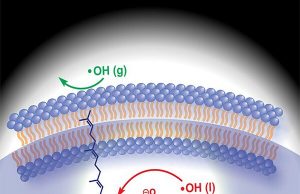
Scientists at the U.S. Department of Energy's Lawrence Berkeley National Laboratory (Berkeley Lab) have made a surprising discovery that could help explain our risk...
Watching magnetic nano ‘tornadoes’ in 3-D
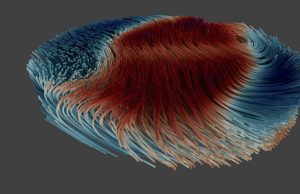
Scientists have developed a three-dimensional imaging technique to observe complex behaviours in magnets, including fast-moving waves and 'tornadoes' thousands of times thinner than a...
Study identifies a transition in the strong nuclear force that illuminates...
Most ordinary matter is held together by an invisible subatomic glue known as the strong nuclear force—one of the four fundamental forces in nature,...
Study reveals similarities between bee brains and human brains
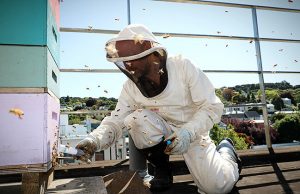
In a discovery that could open new avenues for understanding of the brain, researchers have found similarities between the brain activity of honey bees...
Overlooked arch in the foot is key to its evolution and...
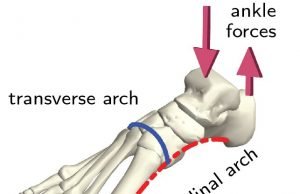
long-overlooked part of the human foot is key to how the foot works, how it evolved, and how we walk and run, a Yale-led...
Human populations survived the Toba volcanic super-eruption 74,000 years ago
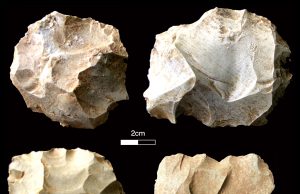
In a study published in Nature Communications, researchers from the Max Planck Institute for the Science of Human History's Department of Archaeology, together with international...


