

Karina

What makes Saturn’s atmosphere so hot
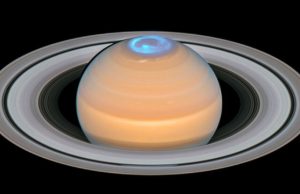
The upper layers in the atmospheres of gas giants—Saturn, Jupiter, Uranus and Neptune—are hot, just like Earth's. But unlike Earth, the Sun is too...
The Milky Way’s satellites help reveal link between dark matter halos...

Just as the sun has planets and the planets have moons, our galaxy has satellite galaxies, and some of those might have smaller satellite...
New measurements reveal evidence of elusive particles in a newly-discovered superconductor

Particle chasing—it's a game that so many physicists play. Sometimes the hunt takes place inside large supercolliders, where spectacular collisions are necessary to find...
Viruses don’t have a metabolism; but some have the building blocks...
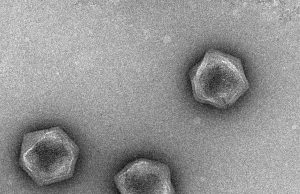
In satellite photos of the Earth, clouds of bright green bloom across the surface of lakes and oceans as algae populations explode in nutrient-rich...
Cold War nuclear bomb tests reveal true age of whale sharks

Atomic bomb tests conducted during the Cold War have helped scientists for the first time correctly determine the age of whale sharks.
The discovery, published...
Magnetoacoustic waves: Towards a new paradigm of on-chip communication
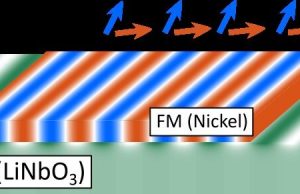
Researchers have observed directly and for the first time magnetoacoustic waves (sound-driven spin waves), which are considered as potential information carriers for novel computation...
Breakthrough in unlocking genetic potential of ocean microbes

Researchers have made a major breakthrough in developing gene-editing tools to improve our understanding of one of the most important ocean microbes on the...
New laser technique will allow more powerful—and smaller—particle accelerators
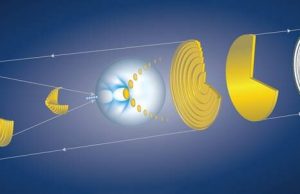
By observing electrons that have been accelerated to extremely high energies, scientists are able to unlock clues about the particles that make up our...
Photocatalytic optical fibers convert water into solar fuel

Researchers at the University of Southampton have transformed optical fibers into photocatalytic microreactors that convert water into hydrogen fuel using solar energy.
The ground-breaking technology...
Astronomers define the ‘really habitable zone’: Planets capable of producing gin...

A hospitable star that doesn't kill you with deadly flares. A rocky planet with liquid water and an agreeable climate. Absence of apocalyptic asteroid...
Study identifies new temperature sensing mechanism in plants

A protein called phytochrome B, which can sense light and temperature, triggers plant growth and controls flowering time. How it does so is not...


