

Home 2020
Yearly Archives: 2020

Past evidence supports complete loss of Arctic sea ice by 2035
A new study, published this week in the journal Nature Climate Change, supports predictions that the Arctic could be free of sea ice by 2035.
High...

New study confirms the power of Deinosuchus and its ‘teeth the size of bananas’
A new study, revisiting fossil specimens from the enormous crocodylian, Deinosuchus, has confirmed that the beast had teeth "the size of bananas," capable of...

Origins of life: Chemical evolution in a tiny Gulf Stream
Chemical reactions driven by the geological conditions on the early Earth might have led to the prebiotic evolution of self-replicating molecules. Scientists at Ludwig-Maximilians...

New Zealand’s Southern Alps glacier melt has doubled
Glaciers in the Southern Alps of New Zealand have lost more ice mass since pre-industrial times than remains today, according to a new study.
Research...
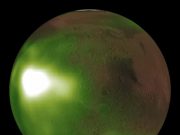
NASA’s Maven observes Martian night sky pulsing in ultraviolet light
Vast areas of the Martian night sky pulse in ultraviolet light, according to images from NASA's MAVEN spacecraft. The results are being used to...
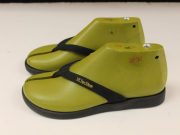
New science behind biodegradable algae-based flip-flops
As the world's most popular shoe, flip-flops account for a troubling percentage of plastic waste that ends up in landfills, on seashores and in...
Algorithm predicts the compositions of new materials
A machine-learning algorithm that can predict the compositions of trend-defying new materials has been developed by RIKEN chemists1. It will be useful for finding...
Lockdown emissions fall will have ‘no effect’ on climate
The unprecedented fall in greenhouse gas emissions from lockdowns during the pandemic will do "nothing" to slow climate change without a lasting switch from...

Fossil mystery solved: Super-long-necked reptiles lived in the ocean, not on land
A fossil called Tanystropheus was first described in 1852, and it's been puzzling scientists ever since. At one point, paleontologists thought it was a flying pterosaur,...

Chemists create the brightest-ever fluorescent materials
By formulating positively charged fluorescent dyes into a new class of materials called small-molecule ionic isolation lattices (SMILES), a compound's brilliant glow can be...
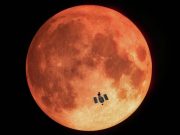
Hubble uses Earth as proxy for identifying oxygen on potentially habitable exoplanets
Taking advantage of a total lunar eclipse, astronomers using NASA's Hubble Space Telescope have detected Earth's own brand of sunscreen—ozone—in our atmosphere. This method...


