

Home 2019
Yearly Archives: 2019

Algae-killing viruses spur nutrient recycling in oceans
Scientists have confirmed that viruses can kill marine algae called diatoms and that diatom die-offs near the ocean surface may provide nutrients and organic...

Toward molecular computers: First measurement of single-molecule heat transfer
Heat transfer through a single molecule has been measured for the first time by an international team of researchers led by the University of...

Jumbo squid mystery solved
The culprit responsible for the decline of Mexico's once lucrative jumbo squid fishery has remained a mystery, until now. A new Stanford-led study published...

China’s plans to solve the mysteries of the moon
Fifty years ago, on July 20, 1969, the world watched as Neil Armstrong walked on the Moon. Since then, space agencies around the globe...

Jurassic fossil shows how early mammals could swallow like their modern descendants
The 165-million-year-old fossil of Microdocodon gracilis, a tiny, shrew-like animal, shows the earliest example of modern hyoid bones in mammal evolution.
The hyoid bones link the back...

A new material for the battery of the future
Renewable sources of energy such as wind or photovoltaic are intermittent; production peaks do not necessarily follow the demand peaks. Storing green energy is...
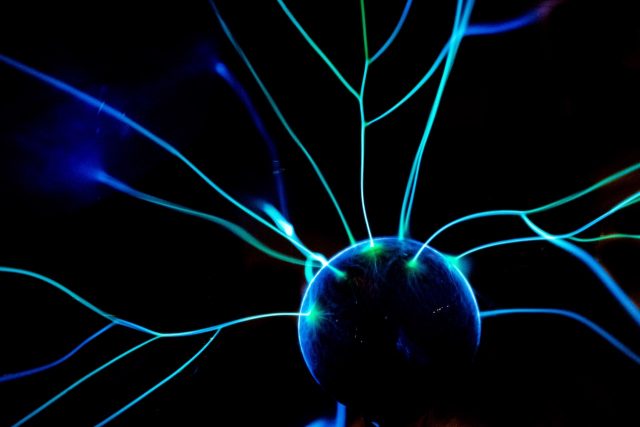
Red wine’s resveratrol could help Mars explorers stay strong
Mars is about 9 months from Earth with today's tech, NASA reckons. As the new space race hurtles forward, Harvard researchers are asking: how...

New laws of attraction: Scientists print magnetic liquid droplets
Inventors of centuries past and scientists of today have found ingenious ways to make our lives better with magnets—from the magnetic needle on a...
Win or lose: Rigged card game sheds light on inequality, fairness
Researchers at Cornell University are using a rigged card game to shed light on perceptions of inequality.
After noticing that card game winners attributed the game's outcome to...
Living longer or healthier? Genetic discovery in worms suggests they can be separated
In a report published today in Nature Communications, a surprising new genetic discovery by researchers at the University of Pittsburgh School of Medicine and UPMC...
Bottomonium particles don’t go with the flow
A few millionths of a second after the Big Bang, the universe was so dense and hot that the quarks and gluons that make...


