

Home 2019
Yearly Archives: 2019

New three-foot-tall relative of Tyrannosaurus rex
A new relative of the Tyrannosaurus rex—much smaller than the huge, ferocious dinonsaur made famous in countless books and films, including, yes, "Jurassic Park—has been...

First demonstration of antimatter wave interferometry
Matter waves constitute a crucial feature of quantum mechanics, in which particles have wave properties in addition to particle characteristics. This wave-particle duality was...
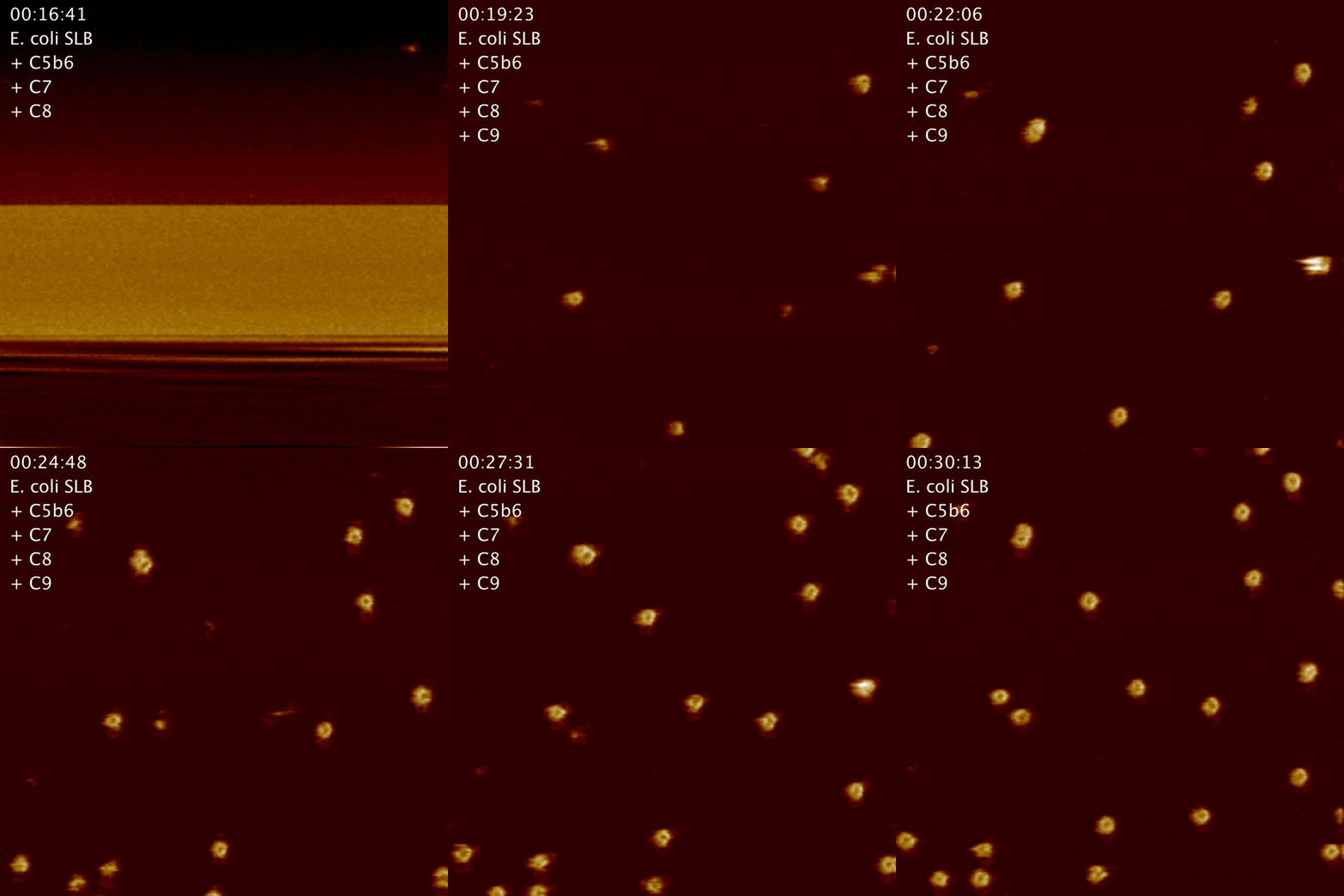
Filming how our immune system kill bacteria
To kill bacteria in the blood, our immune system relies on nanomachines that can open deadly holes in their targets. UCL scientists have now...

What the wheat genome tells us about wars
First they mapped the genome of wheat; now they have reconstructed its breeding history. Joining forces with other European researchers, scientists at the Helmholtz...
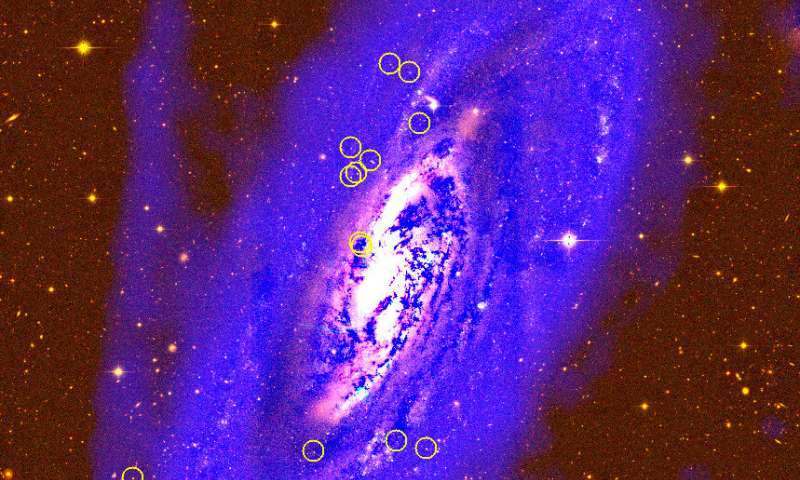
Globular cluster system of Messier 106—a relic of cosmic high noon?
An international scientific team led by a Mexican researcher discovered globular clusters rotating at the same speed as the gas in the disk of...

Bottom-up approach can synthesize microscopic diamonds for bioimaging, quantum computing
Scientists are excited about diamonds—not the types that adorn jewelry, but the microscopic variety that are less than the width of a human hair....
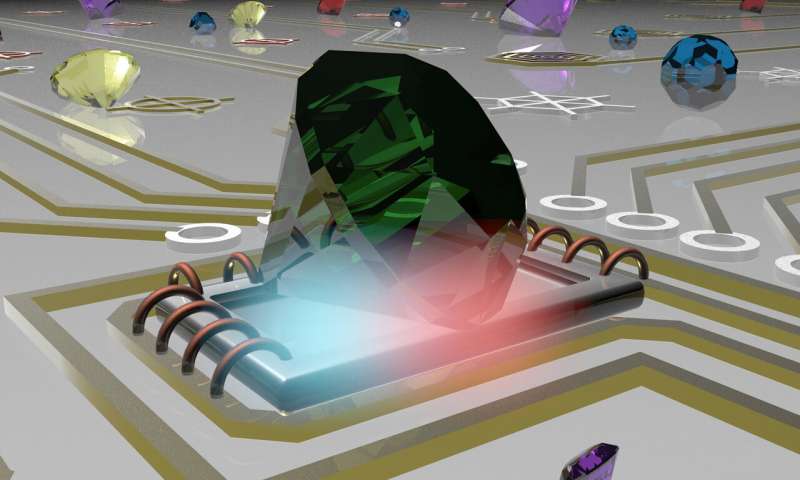
A novel technique that uses quantum light to measure temperature at the nanoscale
Being able to measure, and monitor, temperatures and temperature changes at miniscule scales—inside a cell or in micro and nano-electronic components—has the potential to...

Organ bioprinting gets a breath of fresh air
Bioengineers have cleared a major hurdle on the path to 3D printing replacement organs with a breakthrough technique for bioprinting tissues.
The new innovation allows...
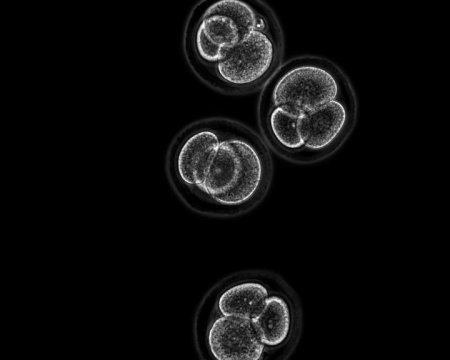
Embryo stem cells created from skin cells
Researchers at the Hebrew University of Jerusalem (HU) have found a way to transform skin cells into the three major stem cell types that...

Chewing versus sex in duck-billed dinosaurs
The duck-billed hadrosaurs walked the Earth over 90-million years ago and were one of the most successful groups of dinosaurs. But why were these...

Running may have made dinosaurs’ wings flap before they evolved to fly
Before they evolved the ability to fly, two-legged dinosaurs may have begun to flap their wings as a passive effect of running along the...


