

Home 2019
Yearly Archives: 2019

Gravitational waves leave a detectable mark, physicists say
Gravitational waves, first detected in 2016, offer a new window on the universe, with the potential to tell us about everything from the time...
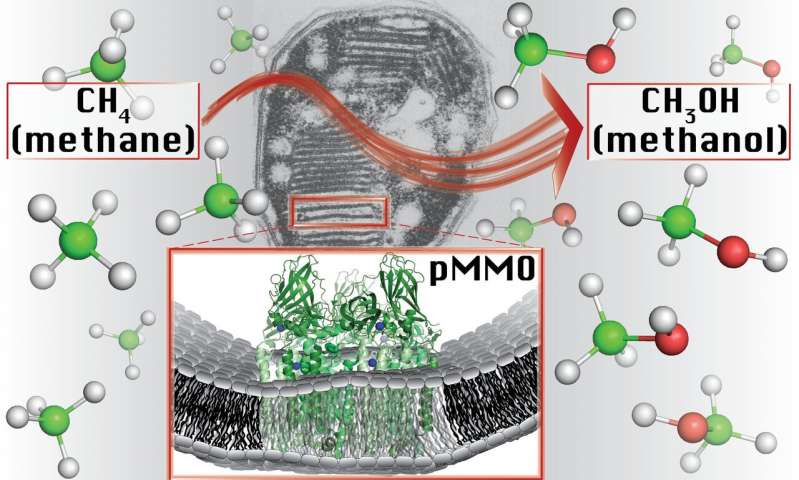
Methane-consuming bacteria could be the future of fuel
Known for their ability to remove methane from the environment and convert it into a usable fuel, methanotrophic bacteria have long fascinated researchers. But...

Researchers develop viable, environmentally-friendly alternative to Styrofoam
Washington State University researchers have developed an environmentally-friendly, plant-based material that for the first time works better than Styrofoam for insulation.
The foam is mostly made from...

Climate change is giving old trees a growth spurt
Larch trees in the permafrost forests of northeastern China—the northernmost tree species on Earth—are growing faster as a result of climate change, according to...
Researchers create ‘force field’ for super materials
Researchers have developed a revolutionary method to intricately grow and protect some of the world's most exciting nanomaterials—graphene and carbon nanotubes (CNT).
When curved and...
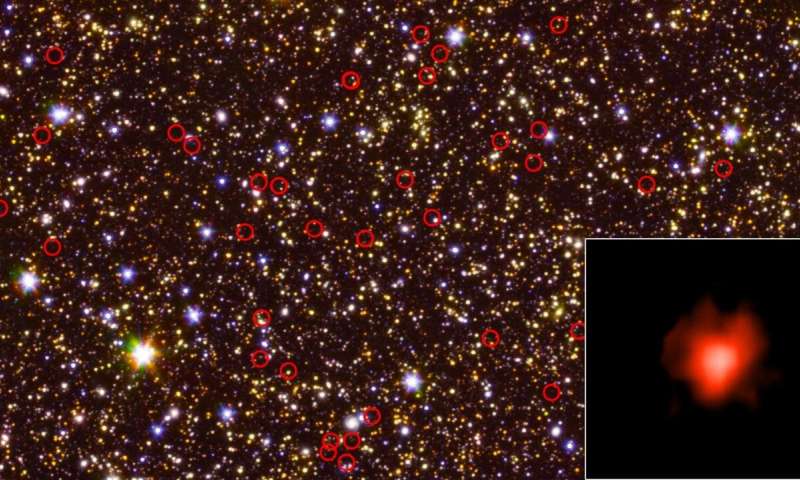
New clues about how ancient galaxies lit up the universe
NASA's Spitzer Space Telescope has revealed that some of the universe's earliest galaxies were brighter than expected. The excess light is a byproduct of...

Abrupt climate change drove early South American population decline
Abrupt climate change some 8,000 years ago led to a dramatic decline in early South American populations, suggests new UCL research.
The study, published in Scientific...
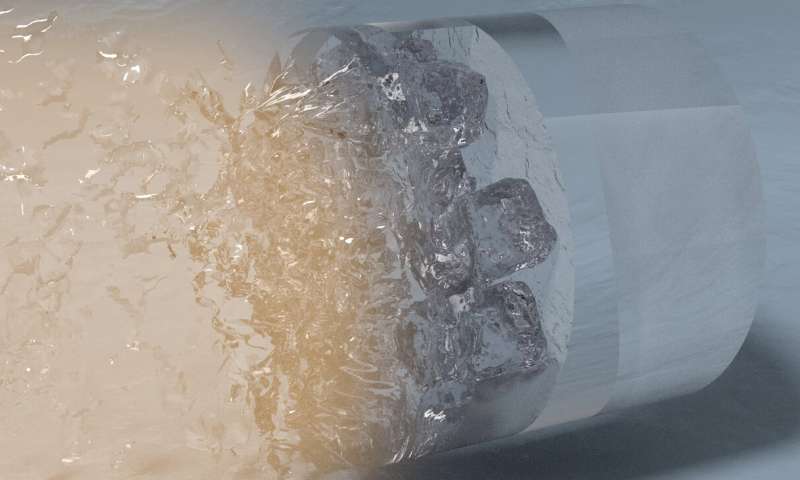
Giant lasers crystallize water with shockwaves, revealing the atomic structure of superionic ice
Scientists from Lawrence Livermore National Laboratory (LLNL) used giant lasers to flash-freeze water into its exotic superionic phase and record X-ray diffraction patterns to...

Source credibility is key to derailing fake news
Fake news is a threat to American democratic institutions and false information can have far-reaching effects. A new study provides a roadmap for dealing...

Statistical study finds it unlikely South African fossil species is ancestral to humans
Statistical analysis of fossil data shows that it is unlikely that Australopithecus sediba, a nearly two-million-year-old, apelike fossil from South Africa, is the direct ancestor...

Radioactive carbon from nuclear bomb tests found in deep ocean trenches
Radioactive carbon released into the atmosphere from 20th-century nuclear bomb tests has reached the deepest parts of the ocean, new research finds.
A new study...


