

Home 2018
Yearly Archives: 2018

Stamp-sized graphene sheets riddled with holes could be boon for molecular separation
MIT engineers have found a way to directly "pinprick" microscopic holes into graphene as the material is grown in the lab. With this technique,...

Novel design could help shed excess heat in next-generation fusion power plants
A class exercise at MIT, aided by industry researchers, has led to an innovative solution to one of the longstanding challenges facing the development...

Scientists forge ahead with electron microscopy to build quantum materials atom by atom
A novel technique that nudges single atoms to switch places within an atomically thin material could bring scientists another step closer to realizing theoretical...

Scientists go ‘back to the future,’ create flies with ancient genes to study evolution
Scientists at New York University and the University of Chicago have created fruit flies carrying reconstructed ancient genes to reveal how ancient mutations drove...
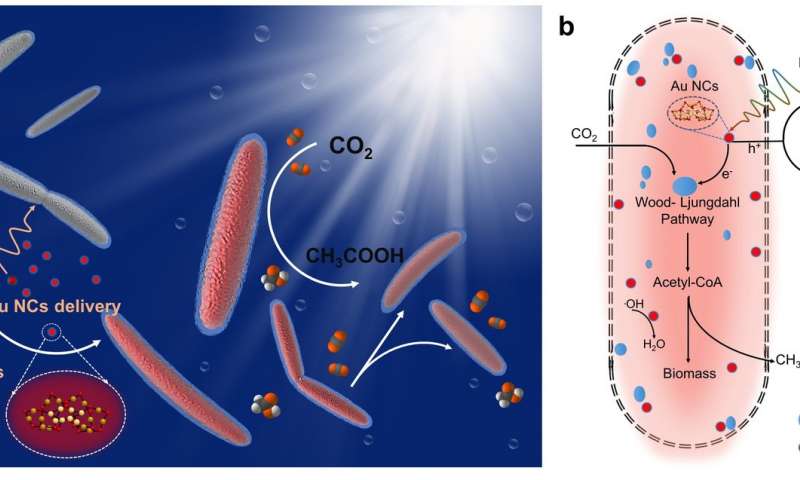
Harvesting solar fuels through a bacterium’s unusual appetite for gold
A bacterium named Moorella thermoacetica won't work for free. But UC Berkeley researchers have figured out it has an appetite for gold. And in...

Scientists mimic the earliest stages of human development
Human embryos start as a tiny mass of cells that are all the same. The first step in growing from a homogenous ball of...

Affable apes live longer, study shows
Male chimps that are less aggressive and form strong social bonds tend to live longer, research suggests.
A study of hundreds of captive chimpanzees showed...
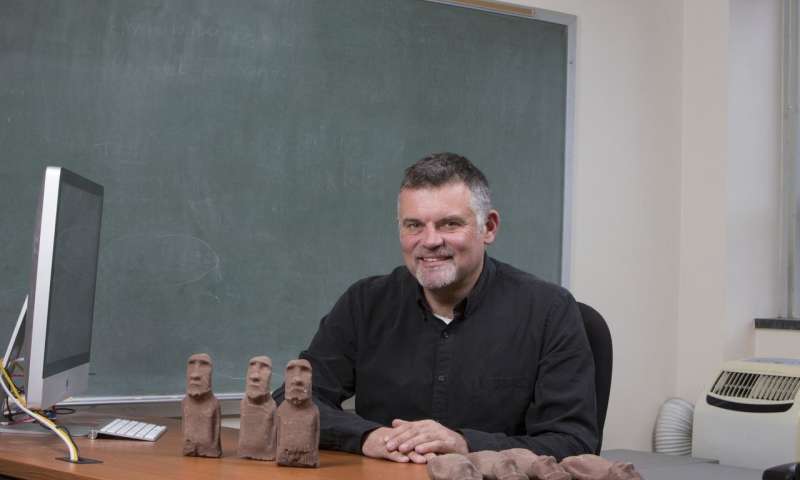
Easter Island inhabitants collected freshwater from the ocean’s edge in order to survive
Ancient inhabitants of Rapa Nui (Easter Island) maintained a society of thousands by utilizing coastal groundwater discharge as their main source of "freshwater," according...

Land-locked Atlantic salmon also use magnetic field to navigate
A new study shows that Atlantic salmon use the Earth's magnetic field as a navigational tool -- much like their cousins, Pacific salmon --...
Rapid response needed to limit global warming
The vast majority of computing devices today are made from silicon, the second most abundant element on Earth, after oxygen. Silicon can be found...

Origin of life in membraneless protocells
How life arose from non-living chemicals more than 3.5 billion years ago on Earth is a still-unanswered question. The RNA world hypothesis assumes that...


