



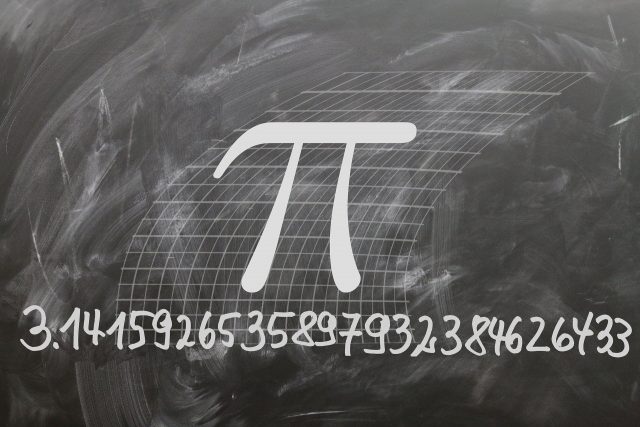
Using AI and computer automation, Technion researchers have developed a 'conjecture generator' that creates mathematical conjectures, which are considered to be the starting point for developing mathematical theorems. They have already used it to generate a number of previously...

Hot on the heels of the ground-breaking 'Sum-Of-Three-Cubes' solution for the number 33, a team led by the University of Bristol and Massachusetts Institute of Technology (MIT) has solved the final piece of the famous 65-year-old maths puzzle with...
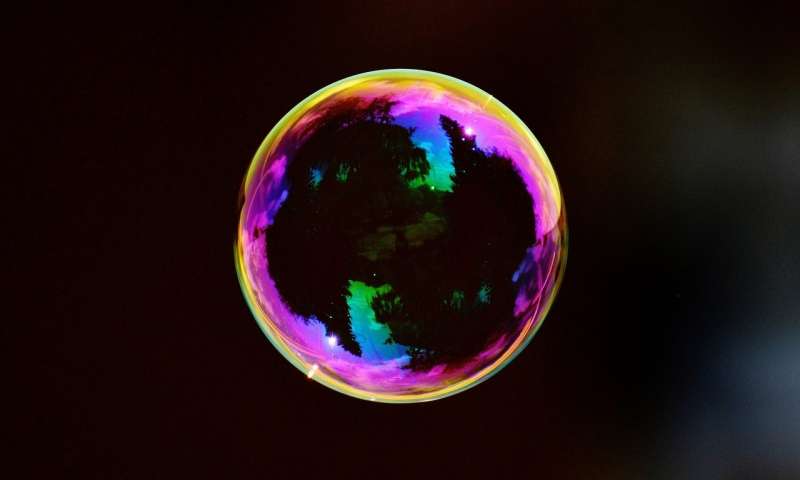
Understanding the dynamics of bursting bubbles can provide critical insights for a range of fields from oceanography to atmospheric science, but the mechanisms that drive the final pop are complex and difficult to describe.
Now, researchers have developed a formula...

Kaleidocycles are found where science, math, and art meet. The objects resemble geometric sculptures that might be found in a modern art museum, but it is the motions they undergo that really capture the imagination. Ring linkages, constructed from...

Animation of negative differential resistance. Credit: University of Alberta
With a storied history that includes more than a half-century of research, a Nobel Prize, and multiple attempts at practical applications, the story of negative differential resistance—or NDR—reads like a scientific...
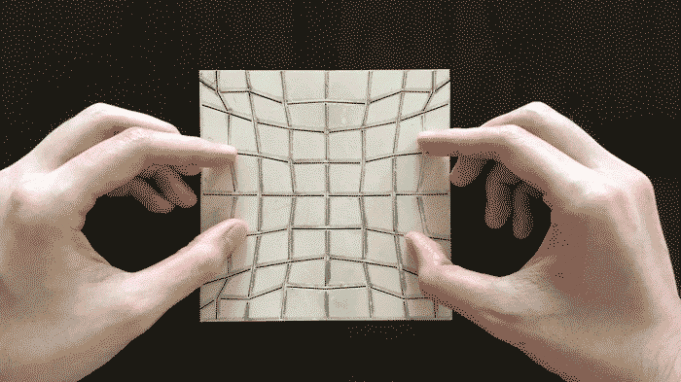
Researchers from the Harvard John A. Paulson School of Engineering and Applied Sciences (SEAS) have developed a mathematical framework that can turn any sheet of material into any prescribed shape, inspired by the paper craft termed kirigami (from the...

The 3,700-year-old Babylonian tablet Plimpton 322 at the Rare Book and Manuscript Library at Columbia University in New York.
Credit: UNSW/Andrew Kelly
UNSW Sydney scientists have discovered the purpose of a famous 3700-year old Babylonian clay tablet, revealing it...

Mathematical thought is seen as the pinnacle of abstract thinking. But are we capable of filtering out our knowledge about the world to prevent it from interfering with our calculations? Researchers from the University of Geneva (UNIGE), Switzerland, and...

Brownian motion describes the random movement of particles in fluids, however, this revolutionary model only works when a fluid is static, or at equilibrium.
In real-life environments, fluids often contain particles that move by themselves, such as tiny swimming microorganisms....
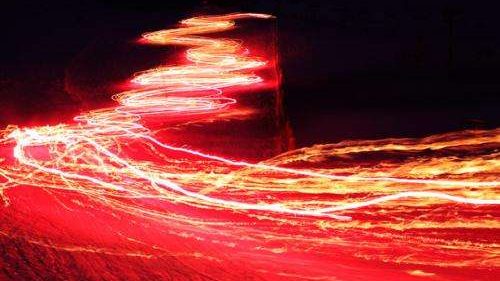
A previously unknown type of light wave has been discovered by researchers, based on the pioneering work of a 19th century Scottish scientist.
Equations developed by renowned mathematician and physicist James Clerk Maxwell have helped to reveal how crystals can...

A scientist has revealed that an ancient clay tablet could be the oldest and most complete example of applied geometry. The surveyor's field plan from the Old Babylon period shows that ancient mathematics was more advanced than previously thought.
A...


